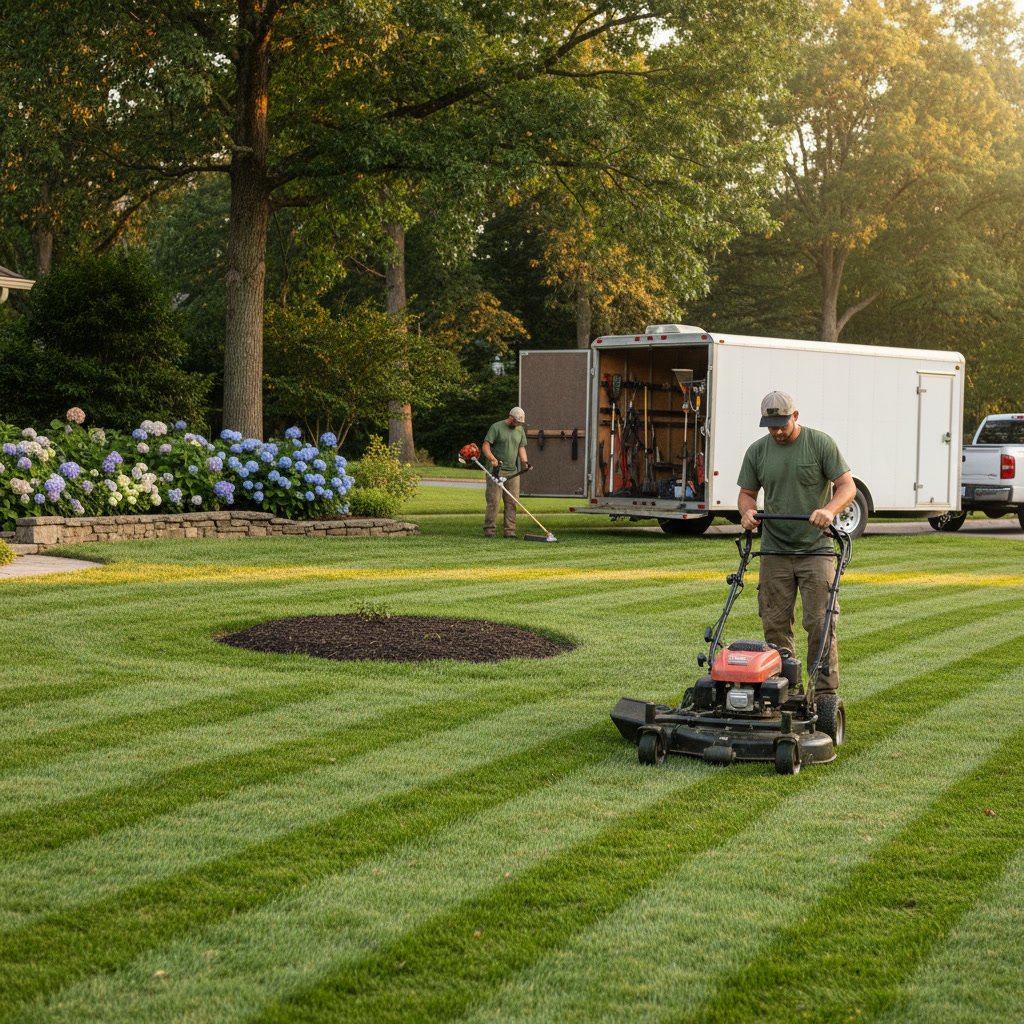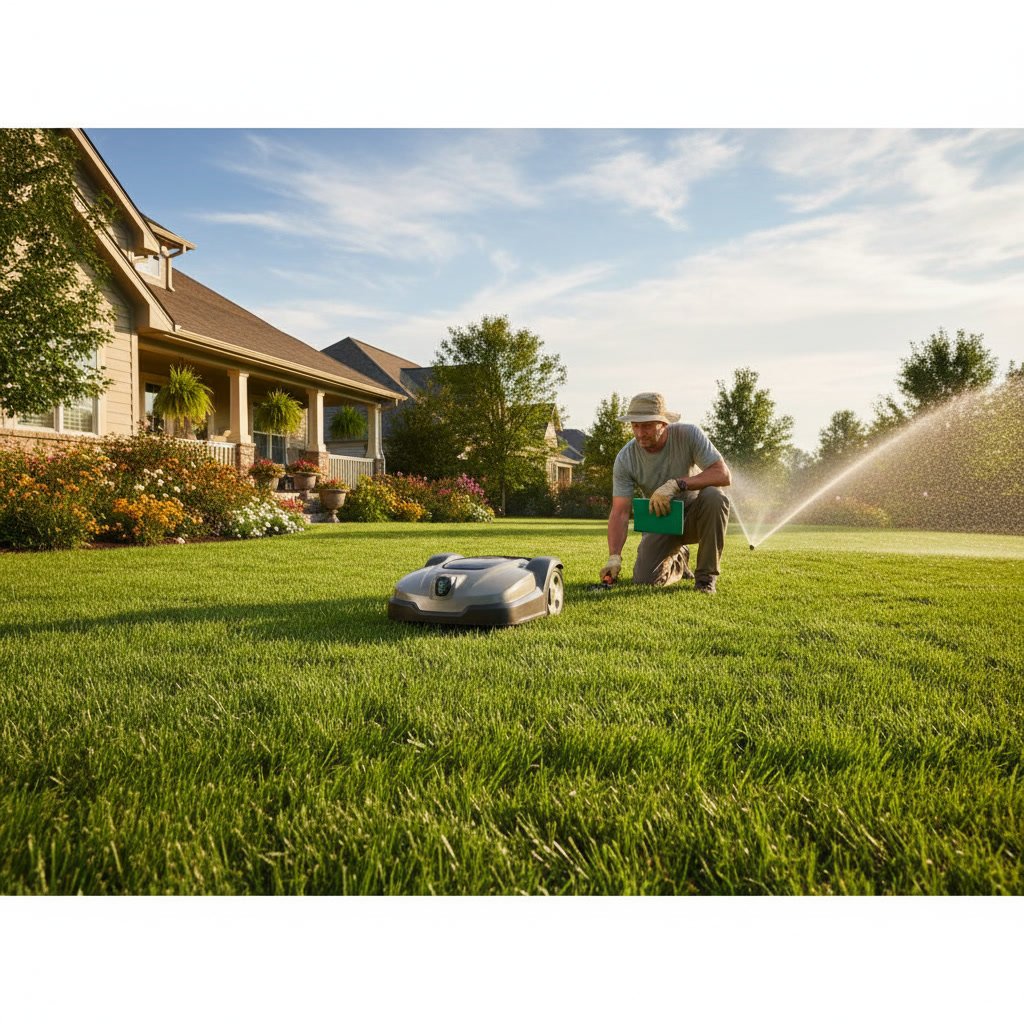
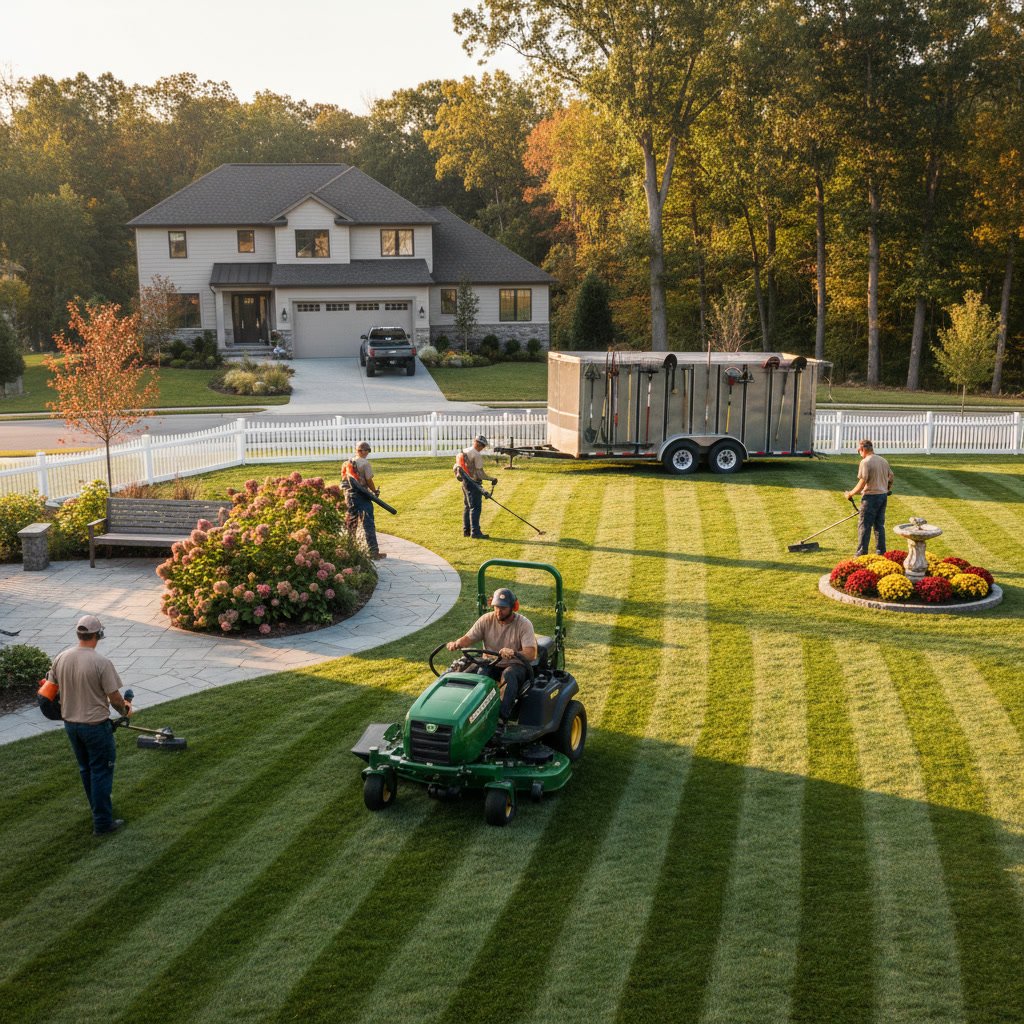
Professional lawn maintenance goes far beyond simply mowing grass. A standard service visit includes mowing at the correct height, edging along borders, trimming around obstacles, blowing debris, and inspecting your turf for potential problems. Understanding what lawn maintenance includes helps you evaluate service quality and know exactly what to expect when a crew arrives at your property.
The Difference Between Mowing and True Maintenance
Many property owners assume lawn maintenance means someone shows up, cuts the grass, and leaves. The reality is far more comprehensive. True maintenance requires attention to detail across multiple tasks that work together to keep turf healthy, attractive, and resilient throughout the growing season.
A maintenance visit addresses both the aesthetic appearance of your lawn and its long-term health. When performed consistently by trained professionals, these visits prevent common problems like uneven growth, thatch buildup, and weed encroachment before they become expensive to fix.
Why Worcester Properties Need Consistent Care
The climate in Worcester, Massachusetts creates unique challenges for turf. Cold winters, humid summers, and variable spring conditions mean grass faces stress from multiple directions. Regular maintenance visits adapt to these seasonal changes and address problems specific to this region.
Properties in areas like Shrewsbury and Holden benefit especially from scheduled maintenance because consistent care prevents the boom-and-bust cycles that leave grass vulnerable to disease and drought.
Mowing at the Correct Height
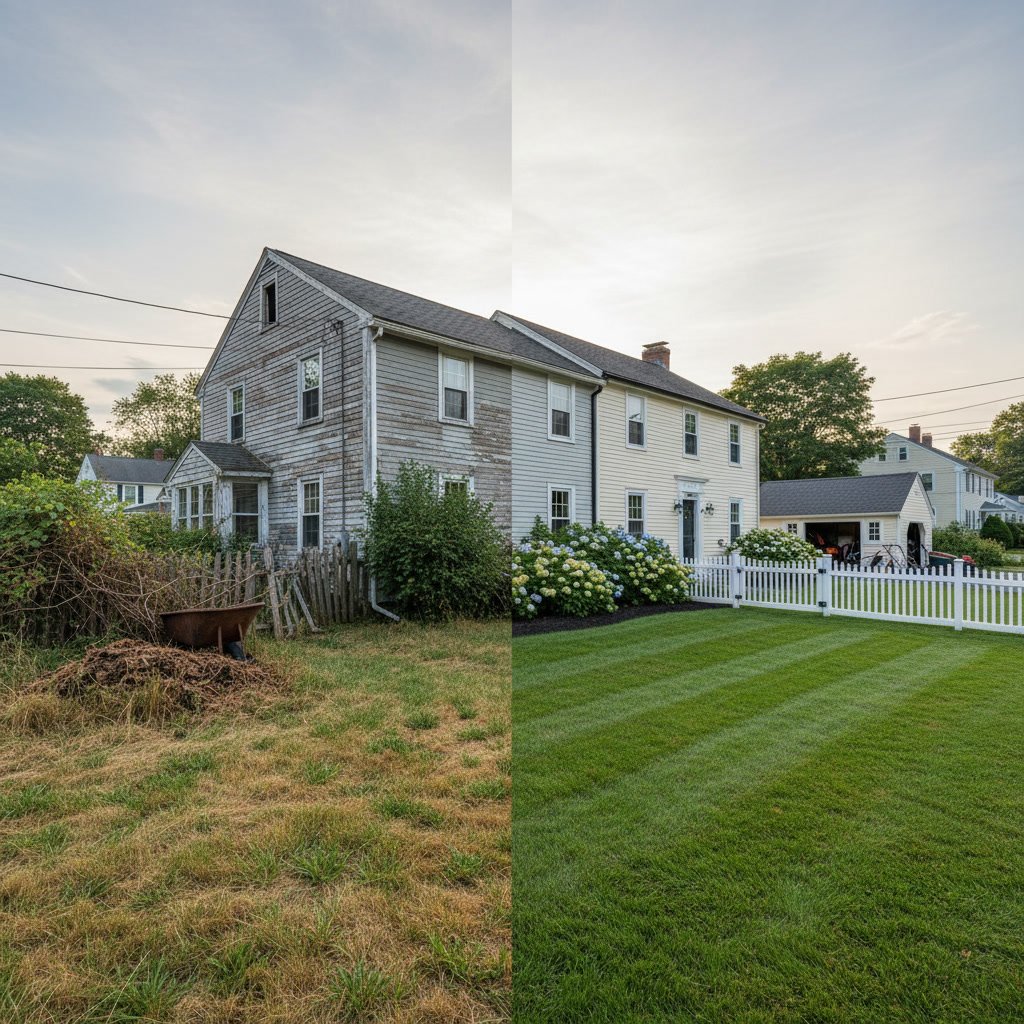
The foundation of any maintenance visit is mowing, but height matters more than most people realize. Professional crews adjust blade height based on grass type, season, and current weather conditions. Cool-season grasses common to New England typically perform best when cut to three inches during peak growing season.
Cutting too short stresses grass roots and allows weeds to establish. Letting grass grow too tall before cutting removes too much blade surface at once, shocking the plant. Understanding proper mowing height separates basic mowing from true maintenance.
Sharp mower blades create clean cuts that heal quickly. Dull blades tear grass, leaving ragged edges that turn brown and invite disease. Quality maintenance services sharpen blades regularly to protect turf health with every pass.
Edging and Border Definition
After mowing, edging defines the boundaries between lawn and hardscape. This step creates crisp lines along walkways, driveways, beds, and patios. Beyond aesthetics, proper edging prevents grass from creeping into areas where it does not belong.
Professionals use dedicated edging tools rather than relying on string trimmers for borders. Edgers cut vertically into soil, creating a clean separation that lasts. String trimmers only address surface grass and often damage adjacent surfaces.
String Trimming Around Obstacles
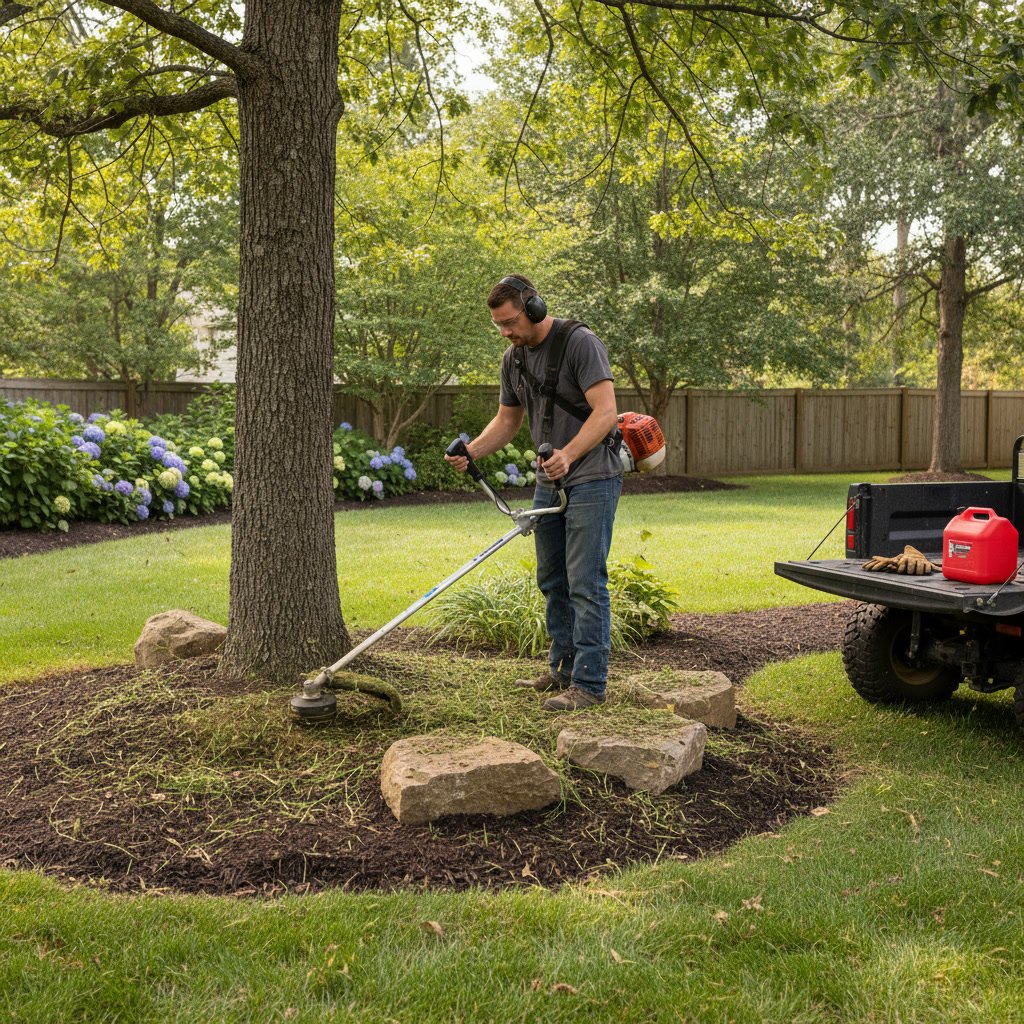
Every property has areas the mower cannot reach. String trimmers handle grass around trees, fence posts, buildings, and landscape features. This detail work ensures uniform appearance across the entire property rather than leaving unsightly rings of tall grass.
Skilled operators hold trimmers at the correct angle to avoid scalping soil or damaging tree bark. They also adjust trimmer height to match the mowed lawn rather than cutting everything to ground level.
Blowing and Debris Removal
After cutting and trimming, debris ends up on hardscapes. Professional crews blow clippings off driveways, sidewalks, patios, and streets back onto the lawn. This step completes the clean appearance and prevents clippings from staining concrete or creating slippery surfaces.
Grass clippings left on the lawn decompose quickly and return nutrients to the soil. Contrary to popular belief, they do not cause thatch when lawns are mowed at proper intervals. Removing clippings wastes valuable organic matter your turf can use.
What a Standard Visit Includes Step by Step
Here is the typical sequence during a professional lawn care maintenance visit:
- Walk the property to identify obstacles, wet areas, or new hazards
- Mow the main lawn area in an efficient pattern, overlapping slightly to avoid missed strips
- Edge along all hardscape borders and bed lines
- String-trim around trees, posts, fences, and structures
- Blow debris from hardscapes back onto turf
- Perform a final visual inspection for quality and missed spots
- Note any concerns to discuss with the property owner
This sequence ensures nothing gets overlooked and maintains consistency across visits. The entire process for an average residential property takes between 30 and 60 minutes depending on size and complexity.
Visual Inspection and Problem Identification
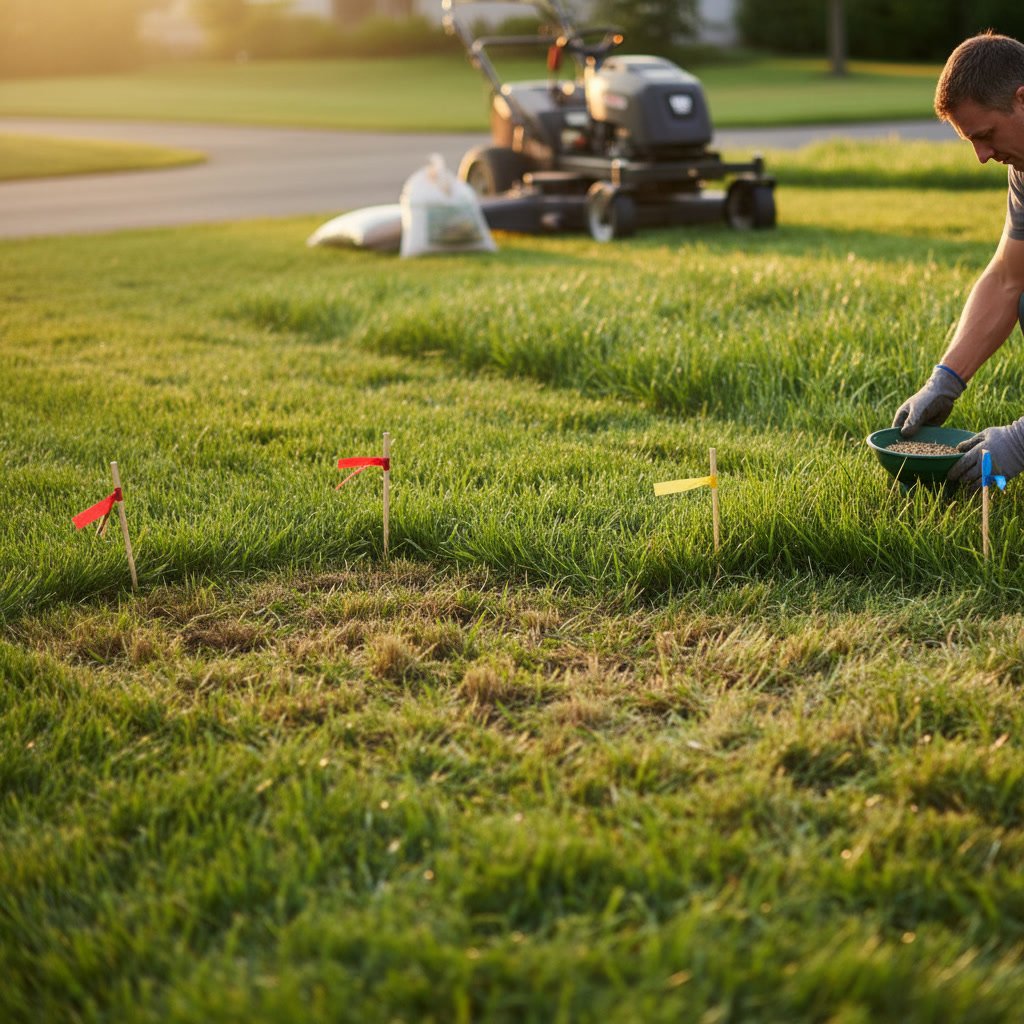
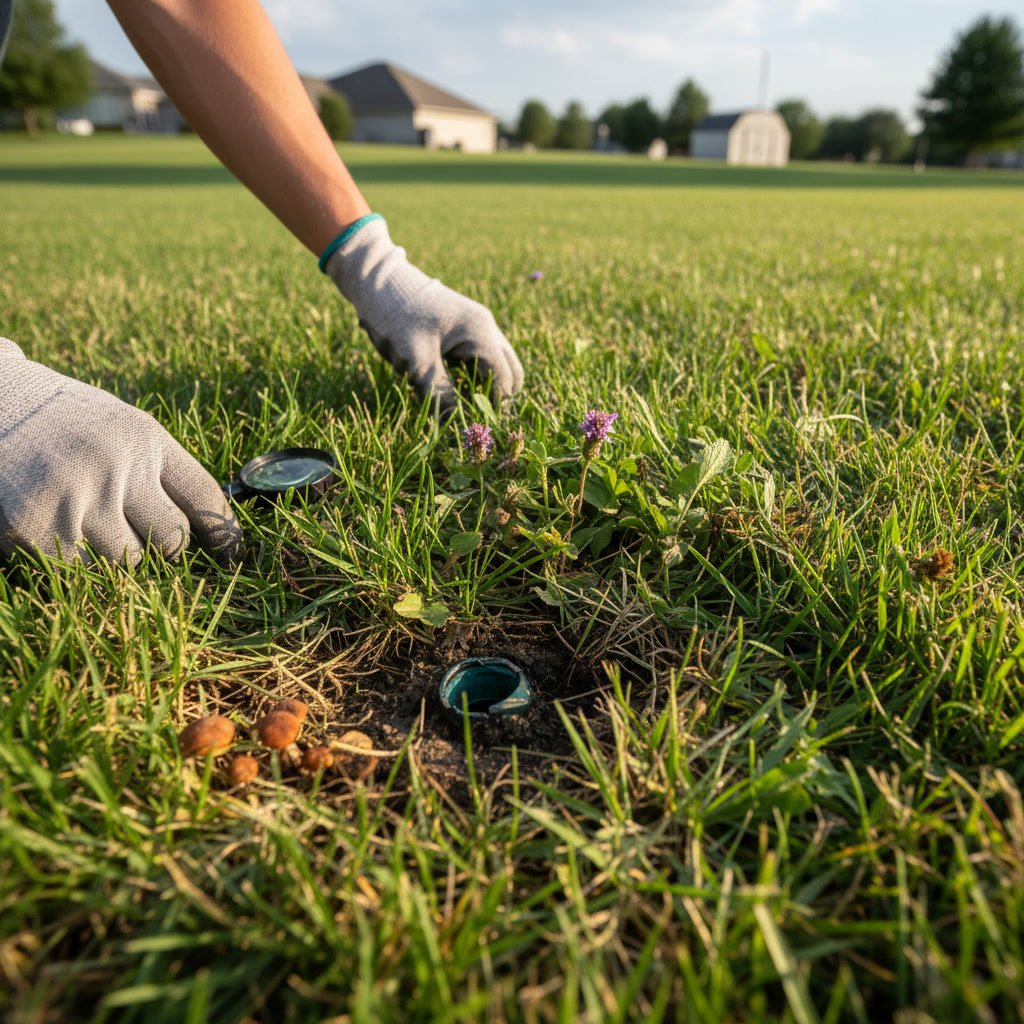
Experienced maintenance professionals do more than execute tasks. They actively look for signs of trouble during every visit. Brown patches, unusual weed growth, insect activity, or drainage issues get flagged early when they are easiest to address.
This ongoing monitoring adds significant value beyond the immediate work performed. Catching problems like grub damage or fungal disease in early stages prevents widespread turf loss that requires expensive repair or even full lawn installation.
Quality maintenance providers communicate findings clearly and recommend solutions rather than simply noting problems and moving on. This consultative approach helps property owners make informed decisions about additional services.
Seasonal Adjustments to Service Visits
Standard maintenance evolves with the seasons. Spring visits often include removing winter debris and assessing turf damage from snow and ice. Summer maintenance focuses on stress management and drought monitoring. Fall visits may involve more aggressive leaf management as trees drop foliage.
Professional services adjust mowing frequency based on growth rates. Grass grows faster in late spring and early fall, requiring weekly visits. Midsummer heat often slows growth, allowing visits to stretch to every 10 days without compromising appearance.
Understanding appropriate mowing frequency for current conditions demonstrates expertise and prevents the waste of cutting grass that has barely grown.
Services Not Typically Included in Basic Visits
While standard maintenance covers essential recurring tasks, several important services fall outside typical visits. Fertilization, weed control, aeration, overseeding, and pest management usually require separate scheduling and specialized equipment.
These supplemental services address different aspects of lawn health. For example, aeration relieves soil compaction and improves root growth, but only needs to happen once or twice per year. Fertilization provides nutrients on a quarterly schedule rather than weekly.
Property owners should clarify which services are included in their maintenance agreement and which carry additional charges. Transparent communication prevents surprise bills and ensures appropriate care gets scheduled.
Getting the Most Value From Your Maintenance Service
The best maintenance outcomes happen when property owners and service providers work as partners. Clear communication about expectations, preferences, and concerns helps crews deliver exactly what you want. Mentioning specific problem areas or desired improvements gives professionals direction.
Maintaining consistent schedules produces better results than sporadic service. Grass responds positively to regular attention and develops deeper roots, better density, and improved resilience. Skipping visits or switching providers frequently disrupts this momentum.
J Landscape LLC brings 20 years of landscaping experience to every maintenance visit, ensuring properties throughout Worcester County receive attentive care that goes beyond basic mowing. Each crew member understands how proper technique and attention to detail create the healthy, attractive lawns that enhance property value and curb appeal.
Professional lawn maintenance protects your investment and gives you time back to enjoy your property rather than spending weekends behind a mower. If you are ready to experience the difference that skilled, consistent care makes for your lawn, reach out to J Landscape LLC at +17742628973 to discuss a maintenance schedule tailored to your property’s specific needs.