
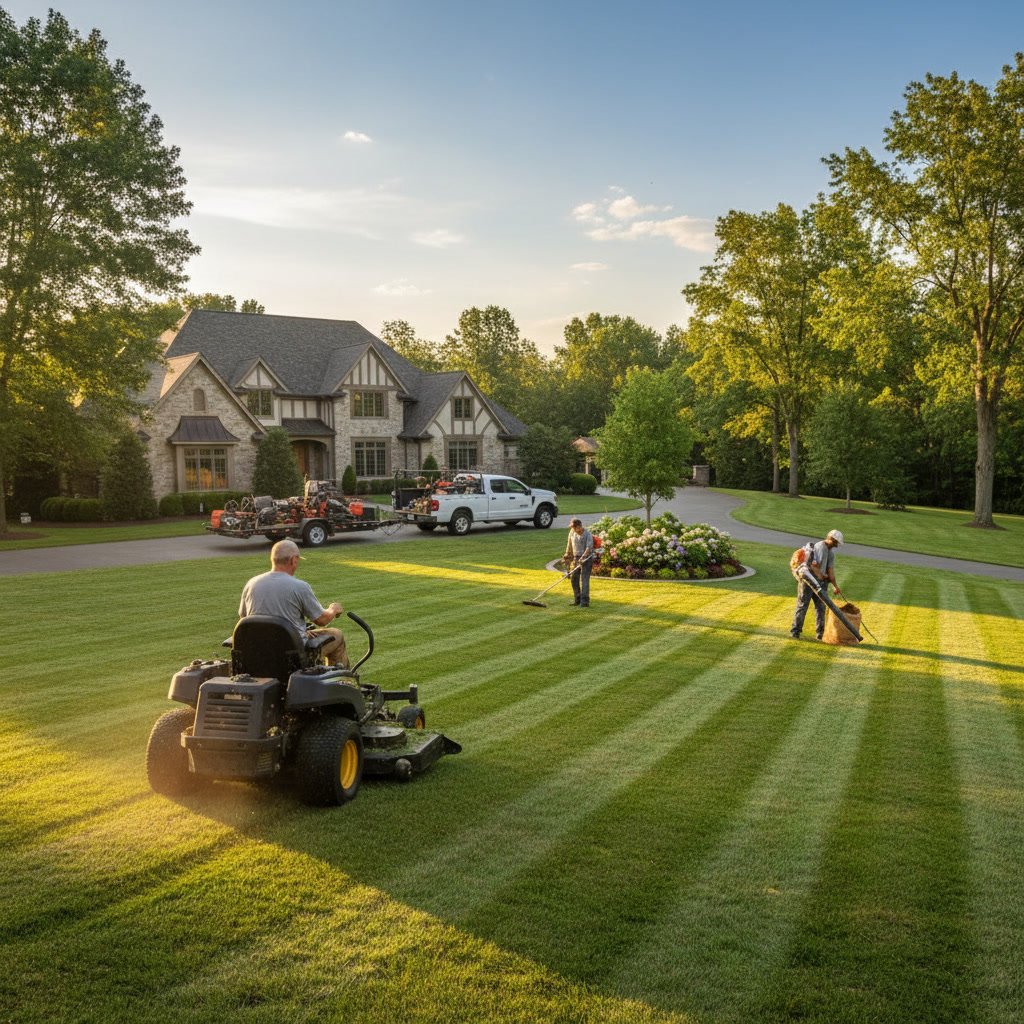
Professional lawn maintenance follows a systematic process that keeps your grass healthy, your property attractive, and your landscape investment protected. A complete service visit includes mowing at the correct height, edging along walkways and beds, trimming around obstacles, and cleanup to leave your property pristine. Understanding each step helps you recognize quality service and know what to expect when a crew arrives at your property.
Why Lawns Need Regular Scheduled Care
Grass grows continuously throughout the season, and neglecting it for even two weeks can create problems that take months to correct. Overgrown lawns develop thick thatch layers that block water and nutrients from reaching roots. Weeds establish themselves more easily in tall grass, and pests find ideal hiding spots. Regular visits prevent these issues before they start.
Most residential properties benefit from weekly service during peak growing months and bi-weekly visits during slower periods. Commercial properties often require more frequent attention to maintain a professional appearance. The schedule depends on grass type, weather conditions, and how quickly your lawn grows.
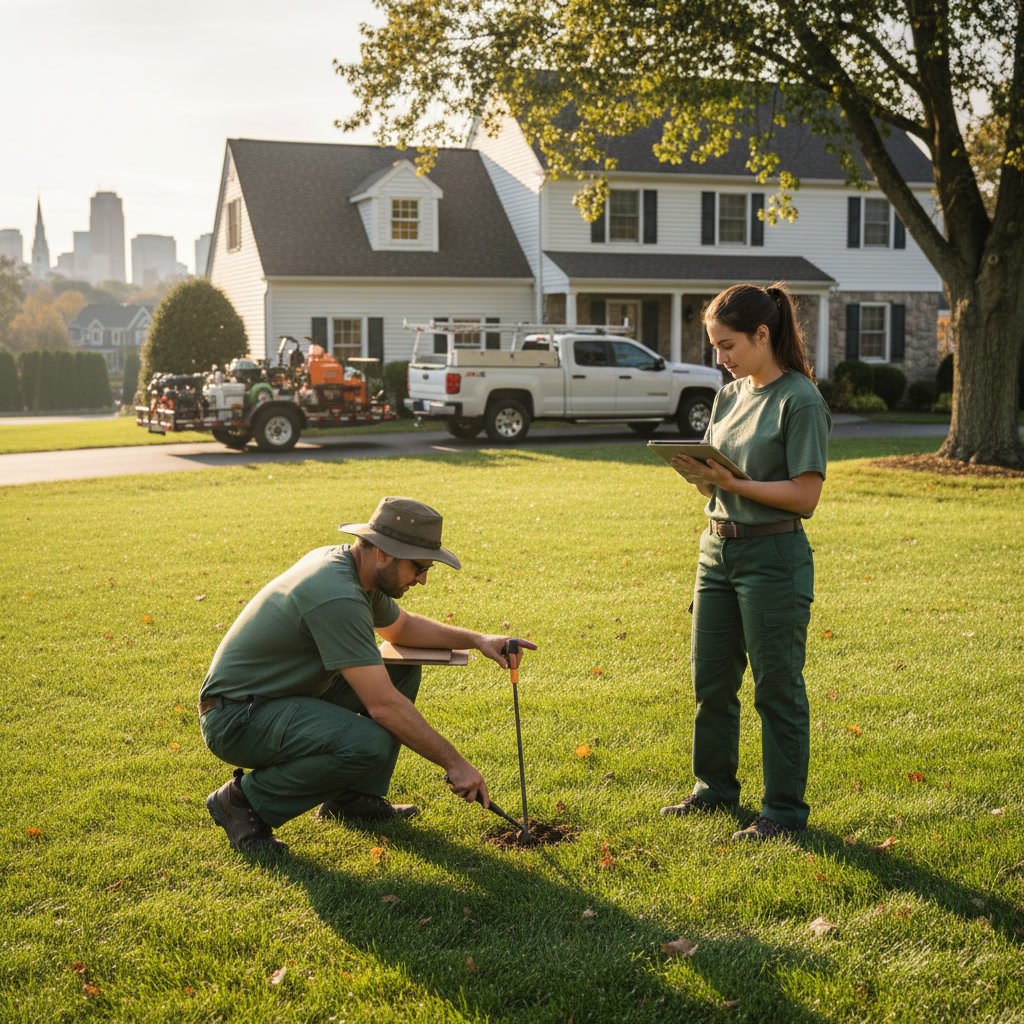
The Initial Property Assessment in Worcester
Before any work begins, experienced crews walk the property to identify potential hazards and plan the most efficient approach. They look for rocks, toys, hoses, or debris that could damage equipment or become dangerous projectiles. Low sprinkler heads, shallow tree roots, and uneven terrain get noted to prevent accidents.
This assessment also reveals lawn health issues. Thin patches might indicate grub damage or soil compaction. Brown spots could signal disease or drainage problems. J Landscape LLC uses these observations to recommend additional services like aeration or drainage solutions when needed.
Step One: Mowing at the Proper Height
Mowing happens first because it generates the most debris. Professionals adjust blade height based on grass type and season. Cool-season grasses common in New England thrive when cut to 3 to 3.5 inches. Cutting too short stresses the plant, weakens roots, and invites weeds.
The one-third rule guides every cut: never remove more than one-third of the blade length in a single mowing. If grass has grown to 4.5 inches, the mower gets set to leave 3 inches behind. This prevents shock to the plant and maintains enough leaf surface for photosynthesis.
Professionals change mowing patterns each visit. Alternating between horizontal, vertical, and diagonal passes prevents soil compaction in wheel tracks and keeps grass growing upright rather than leaning in one direction. Sharp blades are essential because dull blades tear grass rather than cut cleanly, leaving brown, ragged edges that invite disease.
Step Two: Precision Edging Along Hard Surfaces
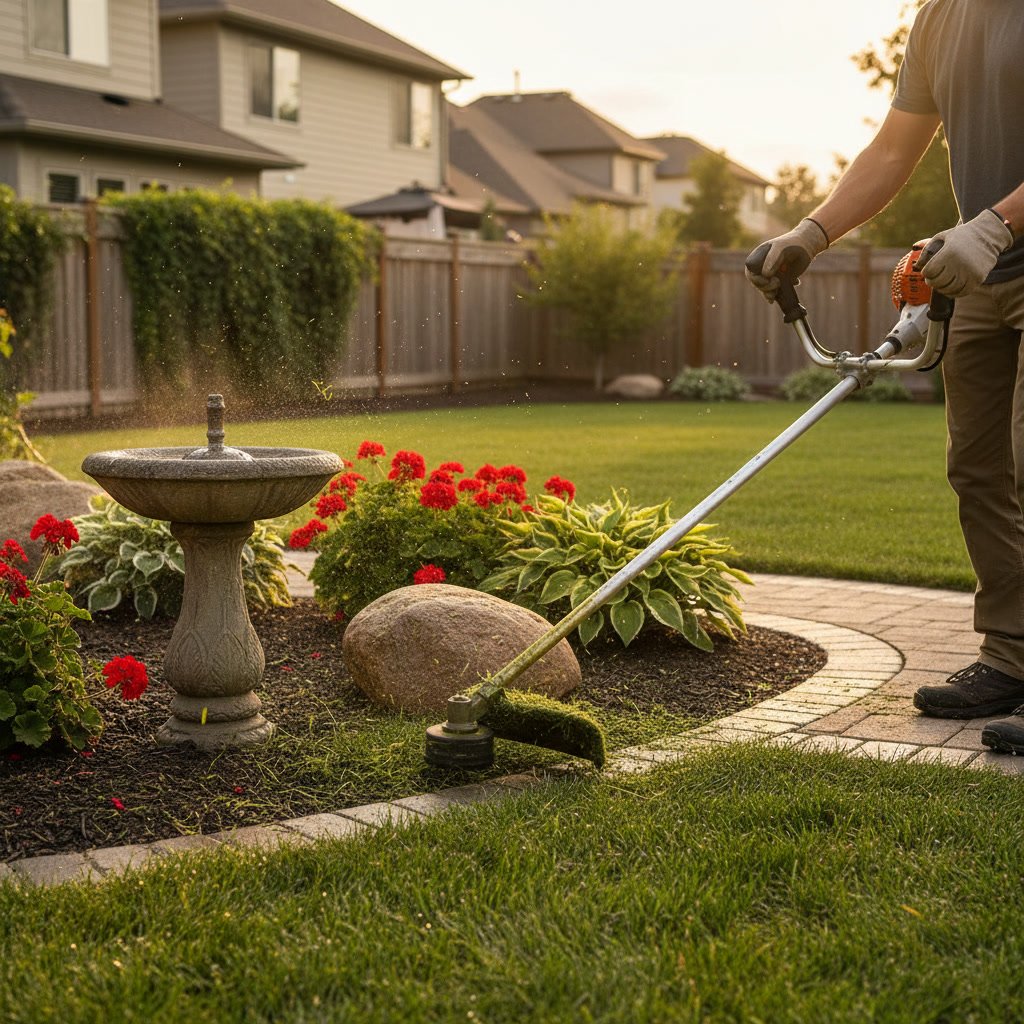
After mowing, crews use string trimmers or edging tools to create clean lines where grass meets driveways, sidewalks, patios, and garden beds. This step defines your property’s appearance more than any other single task. A perfectly mowed lawn looks unfinished without crisp edges.
Edging serves practical purposes beyond aesthetics. It prevents grass from creeping into flower beds where it competes with plants for nutrients. It stops turf from buckling and cracking concrete as roots push underneath. Along driveways, proper edging keeps asphalt edges from crumbling under grass pressure.
Quality crews maintain consistent depth and spacing. The edge should be vertical, not sloped, and typically extends 2 to 3 inches deep. This creates a small trench that clearly separates turf from other landscape elements.
Step Three: String Trimming Around Obstacles
String trimmers reach areas mowers cannot access safely or effectively. This includes perimeters around trees, fence posts, mailbox bases, light fixtures, and building foundations. The goal is matching the height of the surrounding mowed lawn for a uniform appearance.
Skilled operators keep the trimmer head level and move at a steady pace. Scalping the ground creates bare spots that turn to mud during rain and provide openings for weeds. Leaving grass too long in these areas makes the property look unfinished.
Special care goes into trimming near tree trunks. Repeated contact between string trimmer line and bark damages the cambium layer, the living tissue just under the bark. This injury creates entry points for insects and disease. Professionals maintain a small buffer zone around trunks or use lower power settings near sensitive plants.
Step Four: Blowing and Debris Removal
Grass clippings left on walkways and driveways look messy and become slippery when wet. Blowers clear all hard surfaces, directing debris back onto the lawn or into collection areas. This step also removes clippings from mulched beds where they can smother plants or create unsightly piles.
Most clippings stay on the lawn itself. This practice, called grasscycling, returns nitrogen and other nutrients to the soil. Clippings are 85% water and decompose quickly when spread thin. They do not cause thatch buildup, contrary to popular belief. Thatch comes from grass stems and roots, not leaf blades.
Bagging becomes necessary when grass has grown excessively long, when treating certain lawn diseases, or when seed heads are present. Otherwise, leaving clippings saves time and improves soil health naturally.
Additional Services That Complement Regular Visits
Complete lawn care extends beyond basic mowing. Many properties benefit from supplemental services scheduled seasonally or as needed. Grass seeding repairs thin areas and introduces improved grass varieties. Spring and fall represent ideal seeding windows when temperatures and moisture support germination.
Mulching beds during maintenance visits keeps your landscape looking fresh and suppresses weeds. A 2 to 3 inch layer regulates soil temperature, retains moisture, and prevents soil erosion during heavy rains.
Seasonal cleanups remove leaves, dead plant material, and winter debris. These services prepare your lawn for the growing season ahead and protect it before winter dormancy begins.
How Weather and Seasons Affect the Process
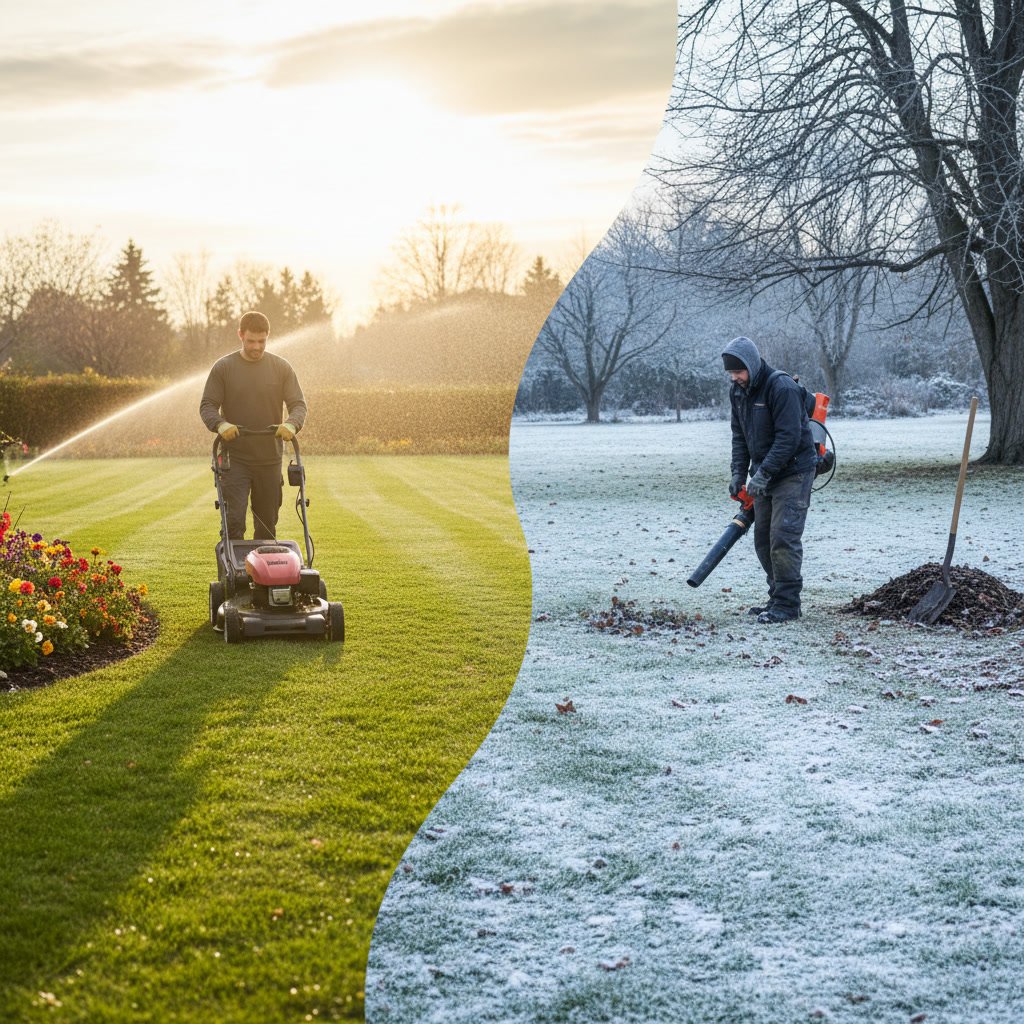
Summer heat stress changes the maintenance approach. Raising mower height to 3.5 or 4 inches helps grass retain moisture and shade roots. Mowing during cooler morning or evening hours reduces stress on both plants and equipment. Crews avoid working on wet grass when possible because mowers tear rather than cut, and heavy equipment compacts soggy soil.
Spring brings rapid growth that may require twice-weekly visits to keep pace. Fall maintenance prepares lawns for winter with a gradual reduction in cutting height toward the final mowing. The last cut of the season typically sits at 2.5 inches to prevent snow mold and reduce vole habitat.
Rain delays are inevitable but necessary. Mowing saturated soil causes ruts, compaction, and uneven cuts. Professional services reschedule rather than compromise quality or damage your property.
Equipment Quality Makes a Measurable Difference
Commercial-grade mowers deliver superior results compared to residential models. They feature wider decks for efficiency, more powerful engines that maintain blade speed in thick grass, and heavier construction that produces even cuts across uneven terrain. Deck design affects clipping distribution and cut quality significantly.
Blade sharpness cannot be overstated. Professionals sharpen or replace blades every 25 to 30 hours of operation. A sharp blade cuts cleanly with minimal tearing, reducing water loss and disease entry points. Dull blades leave ragged brown edges visible from several feet away.
String trimmer line diameter and shape also matter. Thicker line cuts through dense growth more effectively but requires more power. Shaped lines, such as twisted or serrated varieties, cut more efficiently than round line and produce cleaner edges.
Safety Protocols and Property Protection
Professional crews follow strict safety procedures that homeowners often overlook. Eye protection shields against flying debris. Hearing protection prevents long-term damage from engine noise. Steel-toed boots protect feet from blade contact and falling objects.
Property protection includes noting the locations of underground irrigation systems, invisible dog fences, and shallow utility lines. Operators watch for children and pets before engaging blades. Equipment stays clear of windows, parked vehicles, and decorative elements.
Insurance coverage separates professionals from casual operators. Legitimate companies carry liability insurance and workers’ compensation. This protects you if equipment damages your property or if a worker gets injured on your land.
Keeping Your Property Looking Its Best Year-Round
Consistent maintenance creates compounding benefits over time. Regular mowing encourages lateral growth that fills in bare spots naturally. Weekly edging prevents major overgrowth that requires extensive restoration work. Routine debris removal stops organic buildup that smothers grass and creates pest habitat.
The systematic approach used by experienced professionals ensures nothing gets missed. Each visit follows the same sequence, allowing crews to work efficiently while maintaining high standards. This consistency produces reliable results whether the same crew arrives each week or different team members rotate through your route.
J Landscape LLC brings 20 years of landscaping expertise to every property, combining technical knowledge with attention to detail that keeps lawns healthy and attractive through all growing conditions. Quality maintenance preserves your landscape investment and maintains curb appeal that reflects well on your home or business.
Your lawn deserves care from professionals who understand the science behind healthy turf and take pride in precise execution. J Landscape LLC serves properties throughout Worcester and surrounding communities with reliable service tailored to each property’s unique needs. Schedule your maintenance service by calling +17742628973 to experience the difference that systematic, skilled care makes for your landscape.